
Technical Analysis
How 0DTE gamma changes during the trading day
On this page
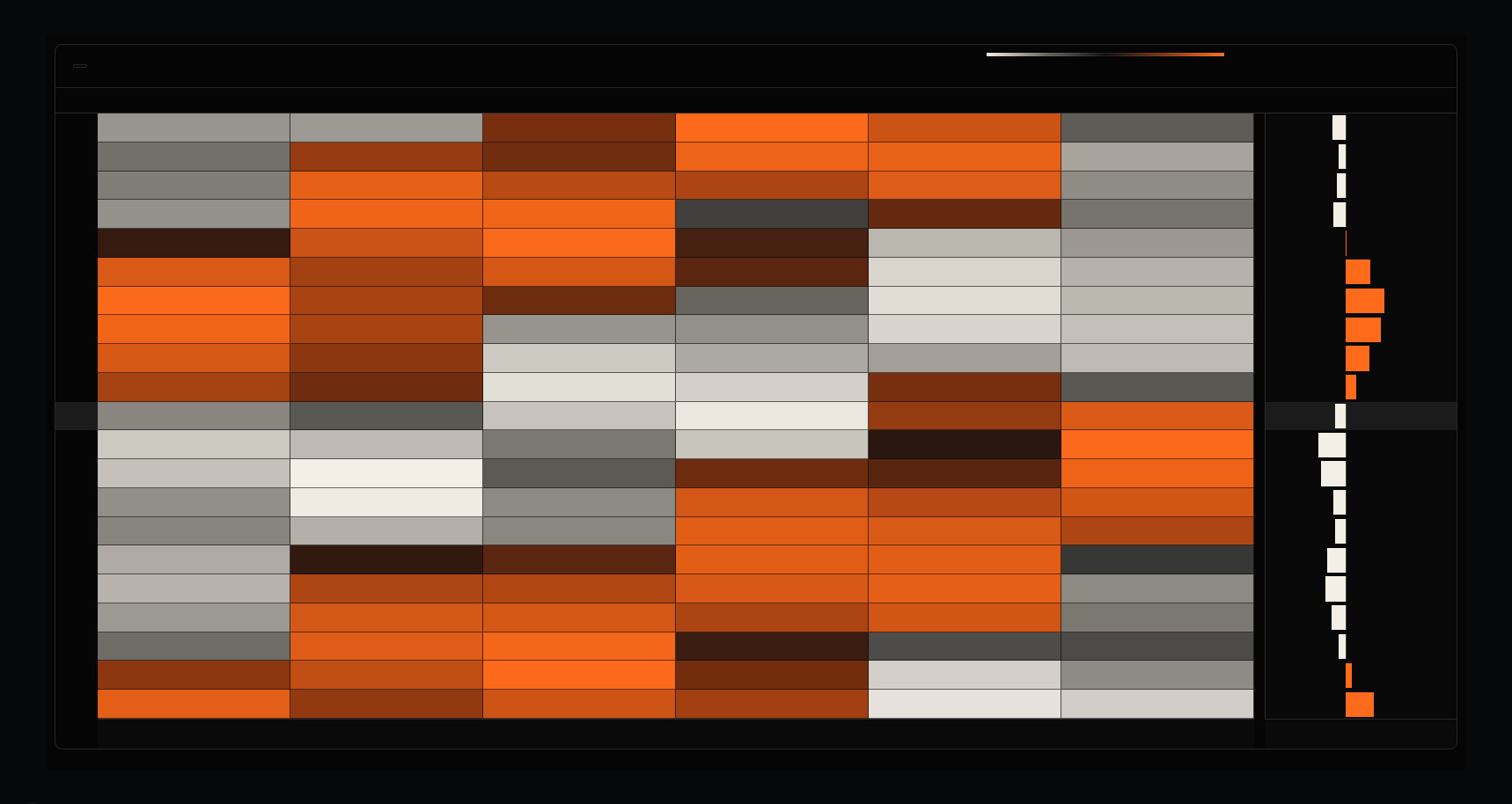
A 0DTE option has no time left after today’s close. That makes the hours inside the session unusually important. An option that begins the morning well away from the underlying price may become close to the money by lunch. Its delta and gamma can change rapidly on the way.
A same-day gamma map can therefore change through the session. The 9:30 picture may no longer describe the market at 2:30, especially after a sharp price move or an important announcement.
Why proximity to the strike matters
Think of an option expiring today with a strike just above the market. Early in the session, it may have little chance of finishing in the money. If price rallies toward the strike, its delta can move much more quickly. Gamma describes that change in delta for a change in the underlying. Close to expiry, the transition around the strike can be steep.
The sensitivity is local. If price races far past the strike, the option can become deep in the money and its gamma may fall again. That is one reason a large morning bar should not be treated as permanent supply or demand at a fixed price. The whole profile can move with the market.
The open-interest problem
Most public GEX models begin with open interest, a count of contracts outstanding after clearing. It is useful for locating existing concentrations, but it does not update tick by tick through the session. Intraday volume answers another question: how many contracts traded. One contract can trade more than once, and a trade can open or close a position. High volume alone does not tell you how the net book changed.
A chart labeled “real time” still presents an estimate of positioning. Check its timestamp and read its labels before treating a fast-moving display as proof that dealer positions are known.
Why a busy 0DTE tape need not force a big hedge
Cboe has published research using proprietary SPX trade data that separates gross trading from net market-maker risk. Large amounts of customer buying and selling can offset. If the net position is small, the hedge implied by gross volume can be far smaller than a headline number suggests. The size and direction of any hedging effect depend on the position actually carried, not simply on contracts traded.
This does not make gamma irrelevant. It gives the word a proper job. A model can point to prices where a hypothetical book becomes more sensitive. It cannot tell you that every dealer will buy or sell a fixed amount at those prices.
A same-day reading routine
Check which expiries the chart includes and when it was last updated. Note the largest nearby strikes. Recheck after a substantial price move or a scheduled announcement. Then compare the map with actual movement and liquidity around those strikes.
The final hour deserves particular care because there is little time for a near-the-money option to recover from a move. Prices, spreads, and sensitivities can change quickly. A trader using options should understand the contract’s settlement and exercise terms as well as the model. The gamma chart does not replace either task.
Sources and further reading
Research and platform documentation used to check this article.