
Technical Analysis
Gamma exposure vs implied volatility
On this page
Options screens put gamma exposure and implied volatility close together. The names sound technical enough that it is easy to lump them into one mood reading. They answer different questions. Implied volatility is the volatility input backed out of an option price. Gamma exposure is a model of how option delta sensitivity might be distributed across a book of contracts.
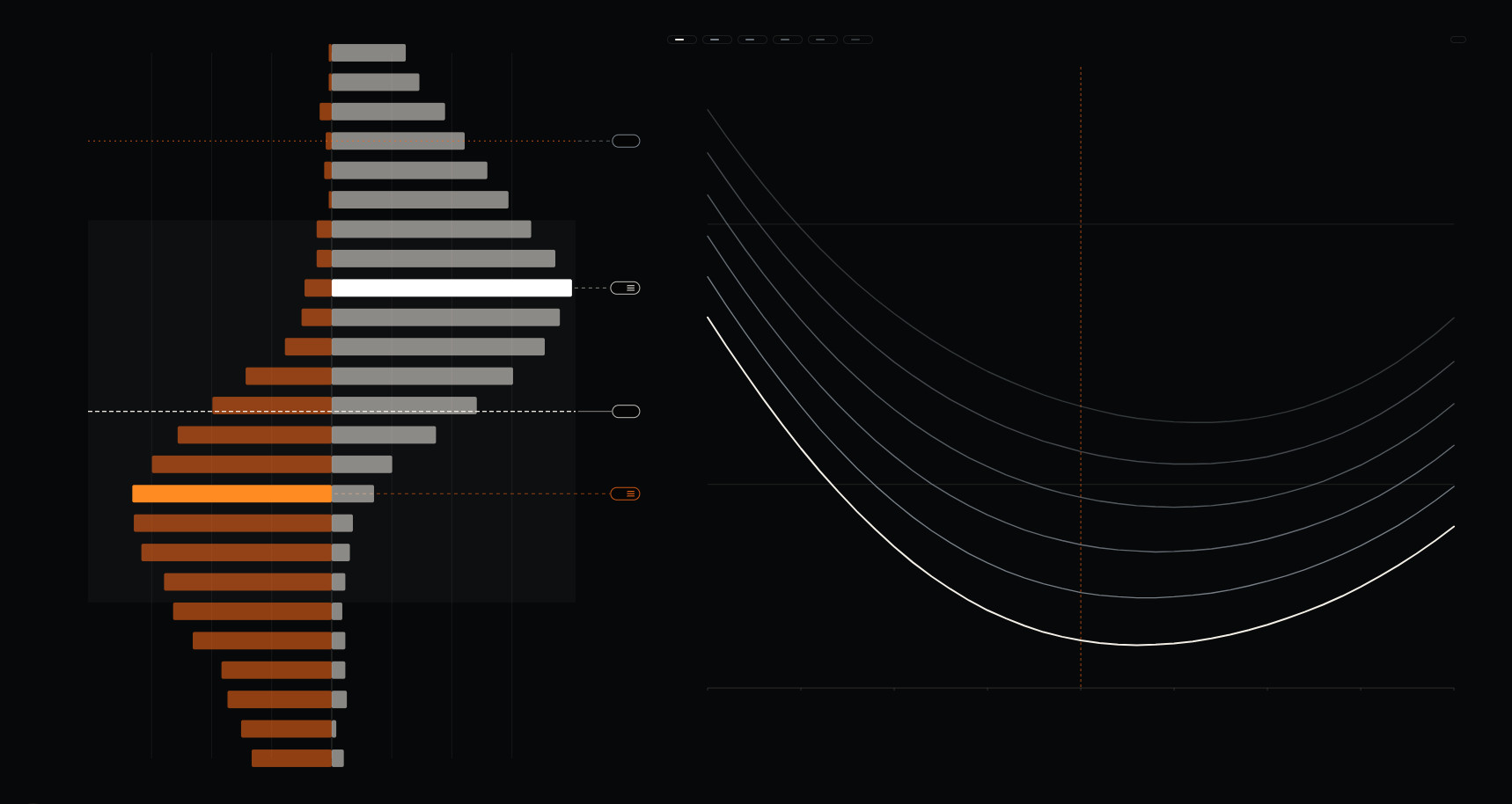
The two are connected because implied volatility is one input to an option’s calculated gamma. That connection does not make them interchangeable. A change in implied volatility can alter a GEX profile even if the underlying has barely moved and open interest has not changed.
What implied volatility tells you
An option price reflects the underlying price, strike, time to expiry, contract terms, and the market’s price for uncertainty. A pricing model can solve for the volatility value that makes its theoretical option price match the market price. That value is implied volatility, usually quoted on an annualized basis. It reflects the option market’s current pricing, including demand for protection and event risk.
Implied volatility is not a promise that the underlying will move by a particular amount. Comparing it with realized volatility can be useful, but the time horizon and calculation method must match. A one-day realized move and a 30-day implied quote are different objects.
What gamma exposure tries to tell you
Gamma is the sensitivity of delta to a change in the underlying. A GEX profile uses a model to show where that sensitivity may be concentrated across the option market. It can highlight notable strikes and an estimated transition area.
The missing piece is ownership. Open interest does not identify net dealer inventory. The model’s sign is an assumption unless a provider has a defensible way to estimate positions. A large positive bar is therefore a property of that model, not direct evidence that a dealer will sell the next rally.
A simple event example
Imagine a major announcement tomorrow. Option prices rise ahead of it, pushing implied volatility higher. The underlying barely moves. A GEX profile calculated from those prices can still change because the volatility input changes each contract’s gamma. After the announcement, option prices may fall as uncertainty resolves. The profile can shift again even if the underlying ends near its starting point.
If the announcement also moves the underlying toward a heavily populated strike, the effect can be larger. Spot and volatility changed together, and time to expiry shortened. To understand the new map, ask which input moved rather than assuming new contracts appeared.
Read them together without collapsing them
Use implied volatility to understand what option prices are charging for uncertainty over a stated horizon. Use a GEX profile to see where modeled delta sensitivity sits across strikes under stated assumptions. When both change sharply, inspect the underlying move, the volatility repricing, and the expiry window before telling a hedging story.
The pairing can sharpen observation. It cannot settle who owns the option risk or guarantee how price responds at a level. Those questions still require current market evidence and a risk plan.
Sources and further reading
Research and platform documentation used to check this article.