
Reading the DOM without fooling yourself
Use the depth-of-market ladder to watch displayed liquidity, executions and the orders that disappear.
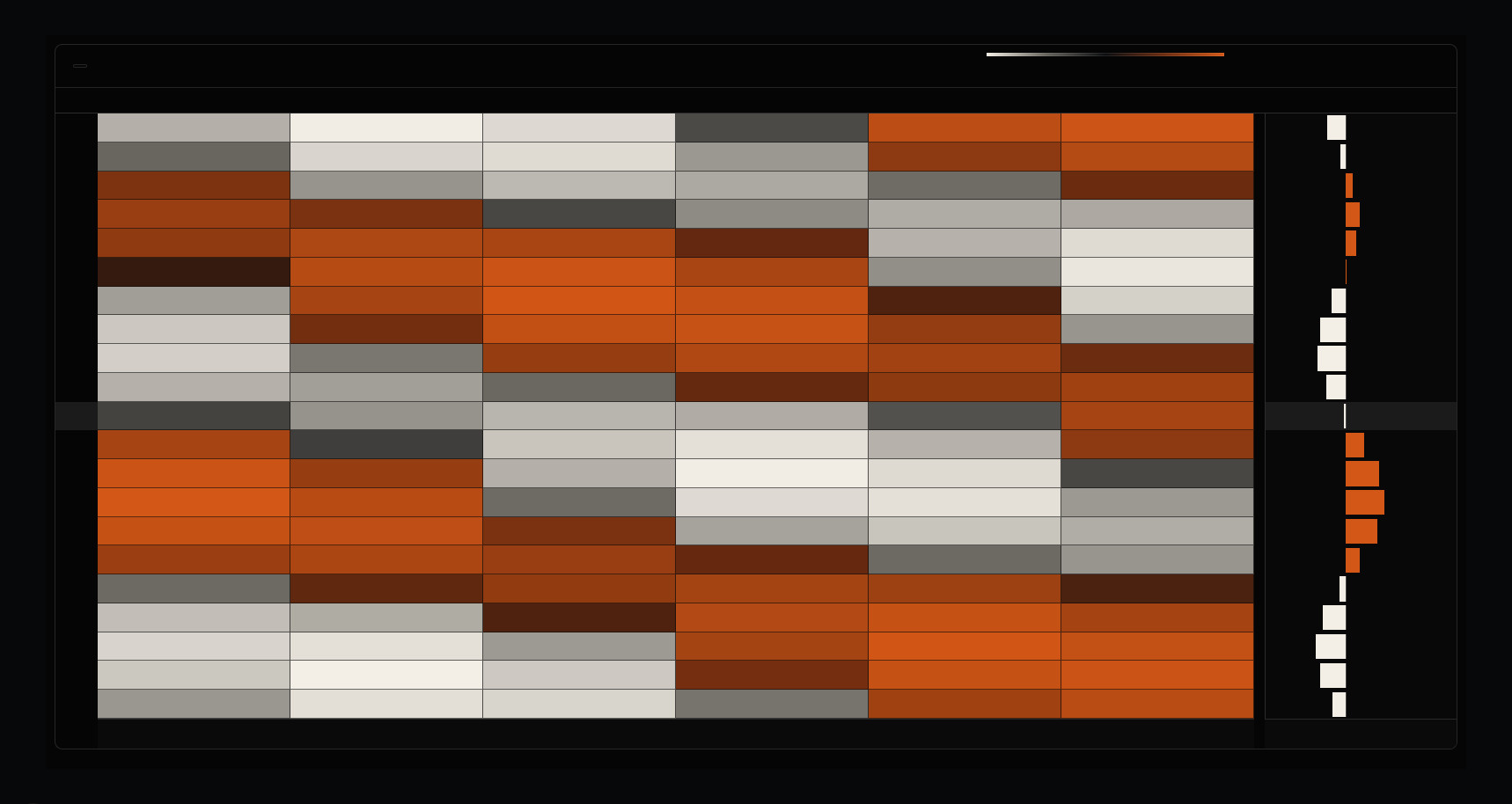
The depth-of-market ladder, or DOM, shows displayed bids and offers around the current price. It can reveal where orders are resting now and how the visible book changes as trades arrive. The word now matters. An order can be added, reduced, or canceled before the market reaches it.
What is actually visible
At each price, the ladder shows displayed limit orders. It does not include every hidden order, every related market, or every participant's future decision. A thick bid may absorb trades, vanish on approach, or be replaced after it fills. The only reliable way to learn which occurred is to watch it interact with executions.
Consider two apparently equal bids. At the first, aggressive sellers trade repeatedly and the displayed quantity replenishes. At the second, most of the quantity disappears before a trade reaches it. A still image would call both prices liquid. Their behavior under pressure is different.
Read trades and quotes together
Executed volume tells you what traded. The DOM tells you what was displayed before and after. Neither makes full sense alone. A large offer can cap a rally for several minutes because buyers actually trade into it without moving price. A large offer that is canceled before the first fill supplied no executed resistance.
Watch the spread and the prices behind the best bid and offer. When nearby depth thins, a modest market order may move price farther than it would in a thicker book. The amount depends on the full order flow, so “thin book” is a risk observation rather than a prediction of direction.
Why snapshots deceive
Platforms update at different speeds and may aggregate venue data differently. Some market participants hide part of an order. Others use ordinary limit orders that they cancel legitimately as conditions change. A screen recording played slowly can make a brief quote look more persistent than it was in real time. Before trusting a DOM pattern, know what feed and aggregation you are viewing.
Order cancellation by itself is not evidence of manipulation. Traders revise orders for many valid reasons. Spoofing is defined by intent to cancel at entry; a public ladder does not reveal intent. The useful observation is simpler: did visible liquidity remain when trades reached it?
A workable practice session
Pick one liquid instrument and one price area with an independent reason to matter, such as a prior session high. Observe several approaches without trading. Note displayed size, executed volume, replenishment, cancellations, and the price after the test. You are training your eye to distinguish a level that absorbs trade from one that merely looked large.
Sources and further reading
The research this guide leans on. Citations rather than links, so they stay verifiable after journal URLs move.
- Harris, L. (2003). Trading and Exchanges: Market Microstructure for Practitioners. Oxford University Press.
- O’Hara, M. (1995). Market Microstructure Theory. Blackwell.
- Hautsch, N. and Huang, R. (2012). The market impact of a limit order. Journal of Economic Dynamics and Control 36(4).