
Balance, imbalance and the open
Use the open and range extensions to describe an auction as it shifts between balance and imbalance.
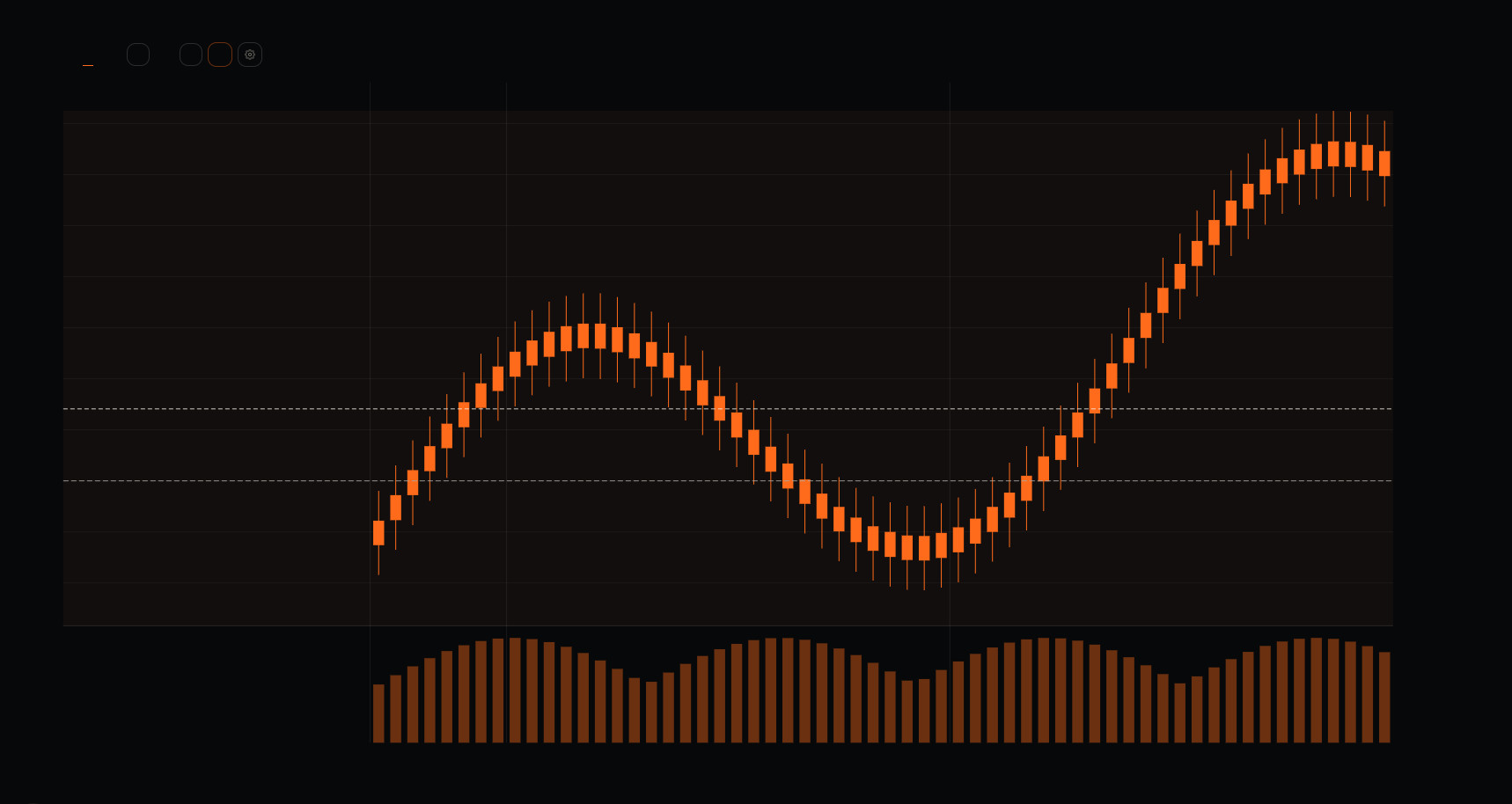
A market in balance spends time moving back and forth through a relatively stable area. A market in imbalance keeps finding trade at new prices. TPO and market-profile traders use those words to describe an auction in progress. They are useful descriptions, not permanent day types assigned in the first few minutes.
The open is an observation window
An open-drive moves away from the opening price with little early return. An open-test-drive briefly probes one side, rejects it, then moves the other way. An open-auction trades around the opening area without clear early direction. These names help you write down what price did. They do not guarantee the afternoon will follow the morning's label.
The first half hour is often busy because overnight orders and new information meet regular-session liquidity. It is also noisy. A headline shortly after the open can overturn a neat initial pattern. Treat the opening range as a reference whose significance has to be tested later.
Acceptance after a range extension
Suppose price moves above yesterday's value area. The extension itself is easy to see. The harder question is whether it is accepted. Does the market spend time trading above the old area, or does it return quickly? Do pullbacks find buyers in the new area? Those observations separate a sustained move from a short excursion more clearly than the first breakout bar does.
An extension that fails can still be informative. If price enters a new area, finds little trade, and returns inside yesterday's value, participants have shown reluctance at the higher prices for now. Another attempt later can produce a different result. The profile records what happened; it does not forbid a second try.
Initiative and responsive activity
Profile traders call movement away from established value initiative activity. Trade that opposes the move and returns price toward the old area is responsive activity. The terms describe the relationship to a reference area. They do not identify who placed an order or why. A large buyer may be opening a position, closing a short, or hedging something you cannot see.
The labels become more useful when attached to a sequence: extension, time spent at new prices, response on the retest, and closing location. One candle away from value is a start, not a finished argument.
Where options positioning fits
A GEX model may suggest where option-related hedge sensitivity is concentrated. A balanced auction near that area can be consistent with a dampening-flow story. It can also be ordinary two-sided trade. If price begins accepting a new area despite a positive gamma estimate, update your read rather than insisting the profile must return to balance.
Sources and further reading
The research this guide leans on. Citations rather than links, so they stay verifiable after journal URLs move.
- Dalton, J.F., Jones, E.T. and Dalton, R.B. (1990). Mind Over Markets. Traders Press.
- Steidlmayer, J.P. and Koy, K. (1986). Markets and Market Logic. Porcupine Press.
- Kyle, A.S. (1985). Continuous Auctions and Insider Trading. Econometrica 53(6).