
Max pain is not a magnet
Max pain is a minimum-payout calculation for an expiry. Learn why that differs from gamma and price pinning.
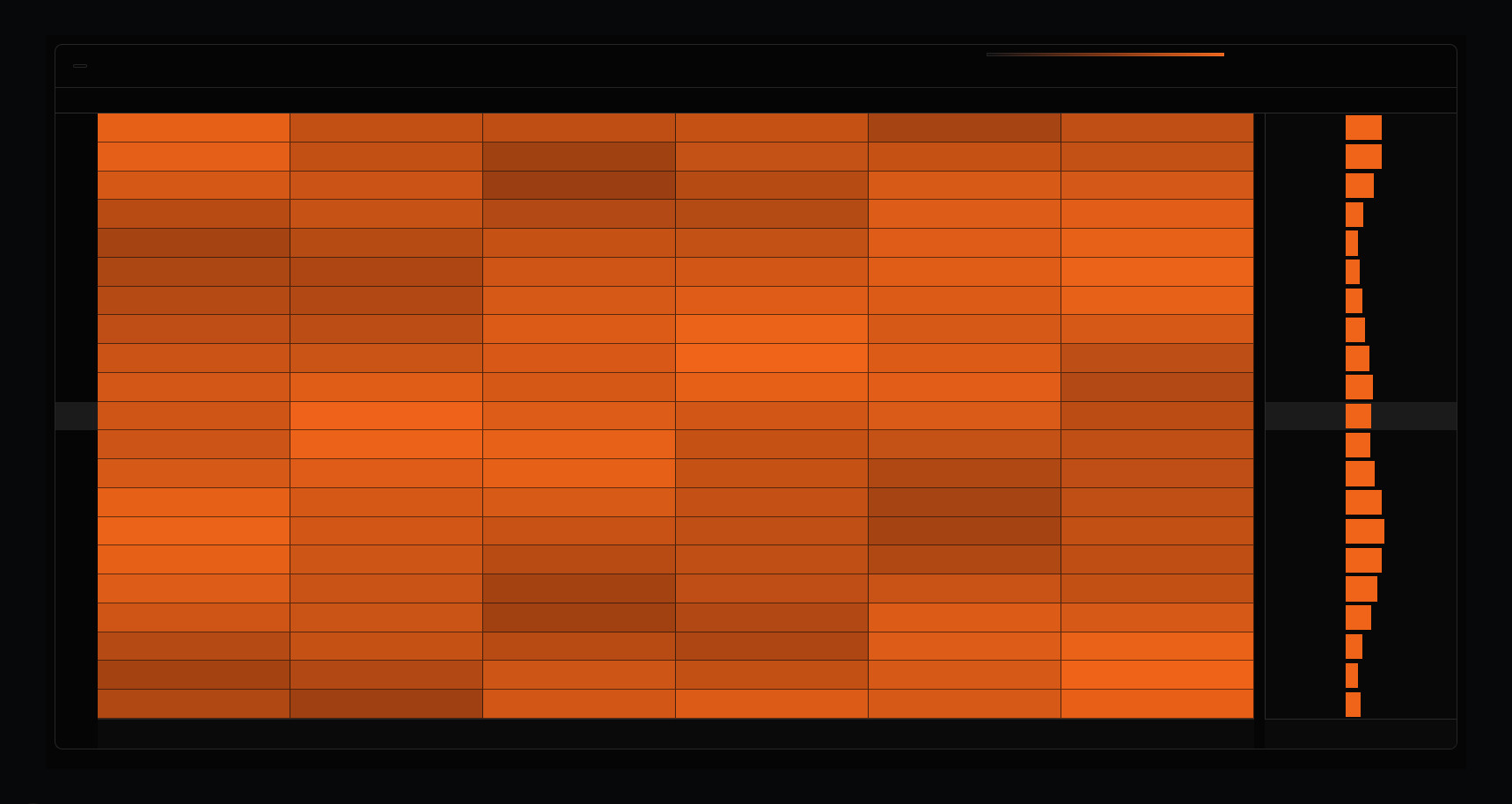
Max pain is a theoretical expiry price associated with the smallest aggregate payout on outstanding options. It is easy to give the number too much authority. It describes a hypothetical settlement, not a force that pulls the market toward a strike.
The name encourages a story about the market being pulled toward a price where option buyers lose the most. The calculation does not identify a participant who can or wants to move the underlying there. It does not account for premiums paid, hedges, or the distribution of positions across customers and dealers.
What the number actually summarizes
Imagine calls clustered at one strike and puts clustered at another. The minimum-payout point is a property of those outstanding contracts under a hypothetical expiry settlement. It can move when the open-interest book changes or contracts expire. It is tied to one expiry, so a number for this Friday should not be carried into the following week.
It also uses open interest, which is normally a prior clearing-cycle measure during the session. Heavy trading today does not immediately tell you how the eventual outstanding book will look. A max-pain number presented with a live clock may still rest on earlier position counts.
Why it can appear to work
Option expiration has been associated with price clustering around some heavily populated strikes in research. Hedging and trading around those strikes can be part of the explanation. Max pain can land near a large concentration because both calculations use the same option chain. Proximity is not proof that the minimum-payout formula caused the movement.
There is also a selection problem. Traders remember a Friday when the close landed almost exactly on max pain and forget the Fridays when the market finished far away after earnings or a broad selloff. Before assigning the number predictive value, compare it with a simple baseline over many expiries and record the misses as carefully as the hits.
Max pain and gamma answer different questions
Max pain asks where aggregate intrinsic payout would be smallest at expiry. A gamma profile asks where option delta would change most for a small move, under a pricing model and position assumption. The modeled gamma flip asks where signed total exposure crosses zero. These outputs can coincide, but their definitions do not make them interchangeable.
If max pain and a large gamma concentration sit near the same strike, mark the area and observe it. If they disagree, inspect the expiry window and the calculation before favoring either. Price behavior and liquidity still matter more than a label on the chart.
Sources and further reading
The research this guide leans on. Citations rather than links, so they stay verifiable after journal URLs move.
- Ni, S.X., Pearson, N.D. and Poteshman, A.M. (2005). Stock price clustering on option expiration dates. Journal of Financial Economics 78(1).
- Avellaneda, M. and Lipkin, M.D. (2003). A market-induced mechanism for stock pinning. Quantitative Finance 3(6).