
Sizing, stops and invalidation
Work from invalidation to stop distance and position size, with room for costs and slippage.
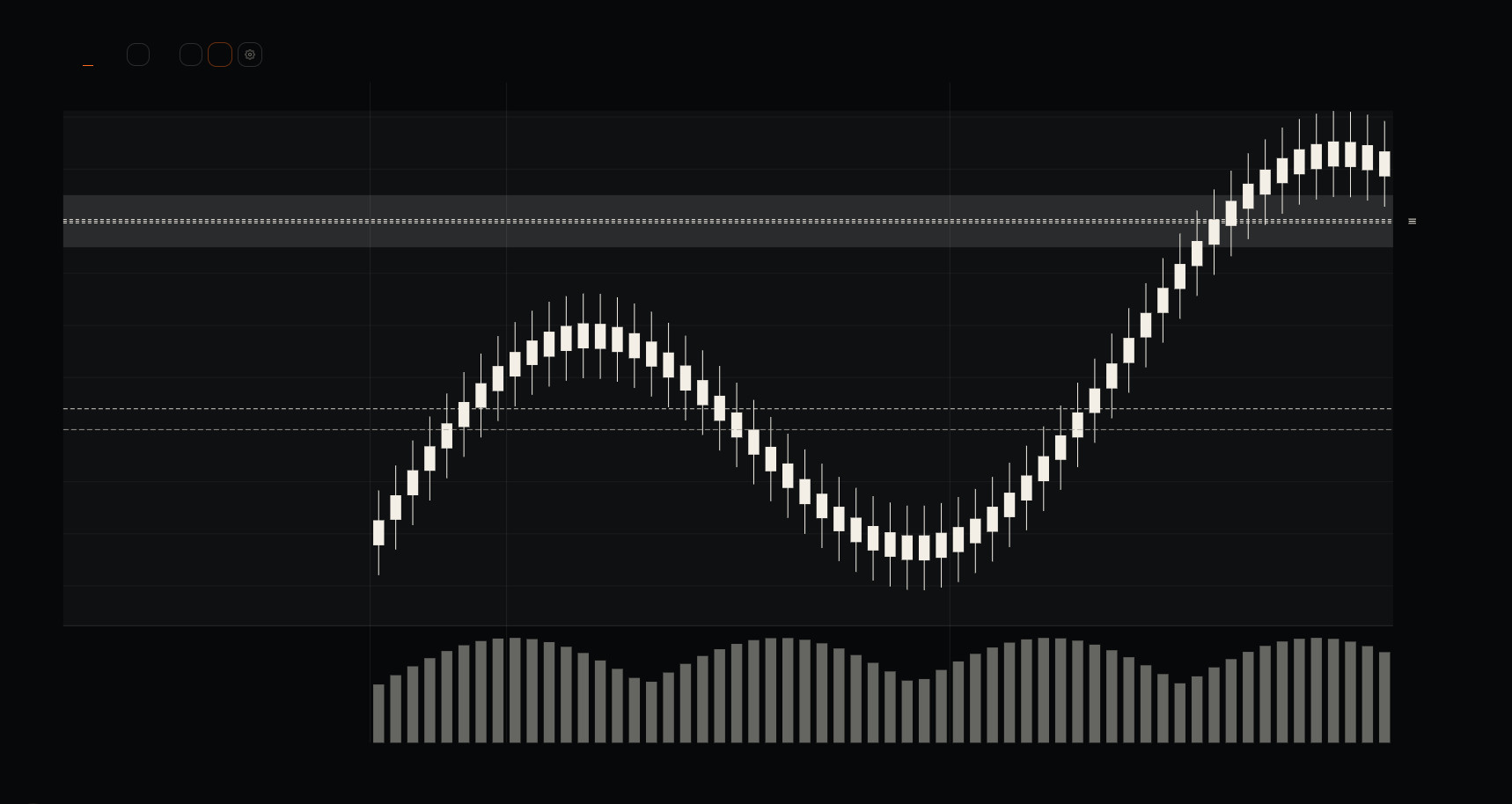
A good market read can still produce a bad result if the position is too large for the trade's uncertainty. Size, stop placement, and invalidation belong together. They should be decided before entry, while you can still think about the idea without defending an open position.
Work from the idea to the risk
Start by stating what would make the trade thesis weaker. For a planned rejection at a level, that might be sustained trade beyond the area. For a breakout, it might be a return into the prior range. The condition needs to fit the instrument and time horizon. A stop placed at a round number simply because it is convenient may not test the idea you thought you were trading.
Next choose a maximum loss you can accept under ordinary execution. Then size the position from the distance to the stop and the value of each price increment. In a straightforward instrument, the rough arithmetic is risk budget divided by loss per unit at the stop. Transaction costs and slippage require room in that budget. The amount at risk is an estimate, because stops can fill worse than requested in fast markets.
A simple example
Suppose an instrument loses $5 per unit for each point against you. Your planned entry to stop is three points, so each unit risks about $15 before costs. With a $150 risk budget, ten units are the arithmetic ceiling before allowing for slippage and fees. If volatility widens the sensible stop to five points, the same budget supports fewer units. The stop did not become wrong; the size changed.
For an option, the relationship between underlying points and contract value is not fixed. Delta, gamma, implied volatility, time decay, and the bid-ask spread all matter. A defined-risk spread has a contractual maximum loss, but the exit before expiry can still be affected by poor liquidity. Check the risk of the actual position rather than borrowing a stock-sized shortcut.
Correlated trades share risk
Three positions tied to the same broad market direction are not three independent chances. If one market shock can stop all three, add their potential losses when checking your budget. A small risk per ticket can become a large risk for one underlying idea.
Position size may also need to shrink when liquidity is poor or a major announcement is minutes away. A stop order is a tool for executing a plan, not a guarantee of an exact exit price.
Review what you controlled
After a trade, note whether the invalidation occurred, whether you followed the planned exit, and how far the fill differed from the estimate. Those records separate a sound process that lost from a position that was too large or an exit rule that was unclear. A string of losses may call for a smaller size while you review the setup; it does not require a more dramatic forecast.
Sources and further reading
The research this guide leans on. Citations rather than links, so they stay verifiable after journal URLs move.
- Kelly, J.L. (1956). A New Interpretation of Information Rate. Bell System Technical Journal 35(4).
- Thorp, E.O. (2006). The Kelly Criterion in Blackjack, Sports Betting, and the Stock Market. Handbook of Asset and Liability Management, vol. 1.
- Odean, T. (1998). Are Investors Reluctant to Realize Their Losses? Journal of Finance 53(5).
- Kahneman, D. and Tversky, A. (1979). Prospect Theory: An Analysis of Decision under Risk. Econometrica 47(2).