
Trading around dealer levels
Prepare for rejection or acceptance at a modeled level and define the risk in the instrument traded.
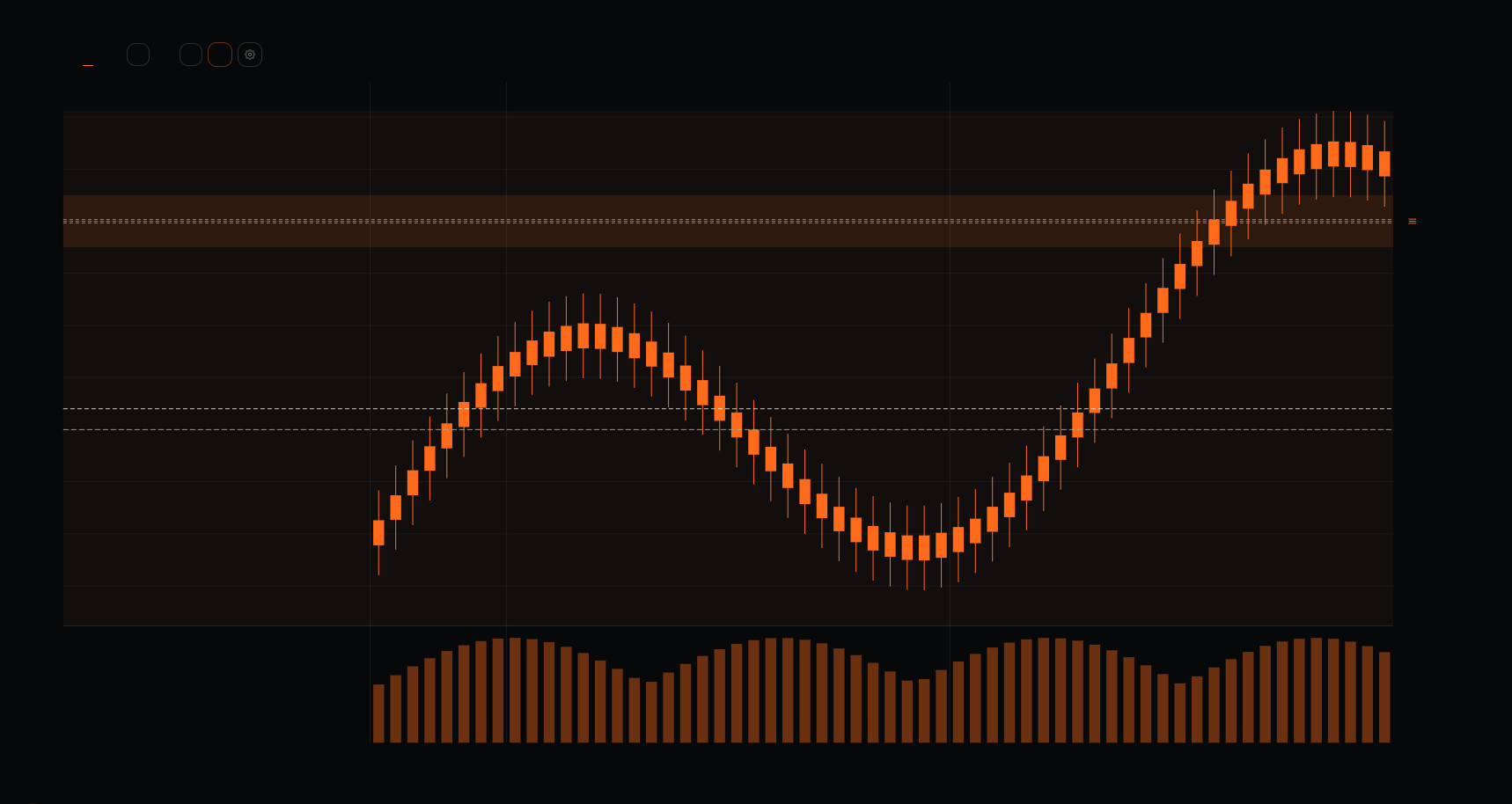
A modeled dealer level is a place to watch, not a complete trade. The market can react there, ignore it, or cross it and return. A workable plan describes what you will observe at the price and what would show the idea was wrong.
Separate the map from the trigger
Suppose a call wall sits just above the opening range. The map tells you where a model sees concentrated call gamma. It does not tell you whether dealers are actually long or short that exposure, or whether a large buyer is about to trade through the area. A trigger has to come from current behavior: repeated failure to progress, acceptance above the strike, changes in liquidity, or a clearly defined pattern in executed trades.
This separation is especially useful when the level is popular. Many traders can draw the same line, but their orders and risk limits differ. The line alone has no mechanism for choosing your entry or stop.
Two possible responses to a wall
One possibility is rejection. Price approaches the area, trades into it several times, and cannot sustain a move beyond it. A trader considering a reversal can define a level that would invalidate the observation and a nearby area where profit might be taken. The distance between them matters more than the name of the wall.
Another possibility is acceptance. Price crosses the area, spends time beyond it, and a retest holds from the other side. That can justify looking for continuation, provided the broader market and liquidity support the read. A first tick through the line is weaker evidence than sustained trade. The plan should also say what failed acceptance looks like.
Neither response follows automatically from positive or negative modeled gamma. News, non-option orders, and the actual dealer book remain unknown. The point is to prepare for both observable outcomes before price arrives.
Stops and size come from the instrument
A stop should correspond to a price or condition that challenges the reason for the trade. Its placement also has to allow for ordinary noise, spreads, and slippage. If the stop is far enough away that the position would exceed the intended risk, reduce the size or skip the trade. Moving the stop after entry just to preserve a thesis changes the original risk decision.
In options, the premium and Greeks complicate the connection between an underlying price level and a position's profit or loss. A spread can widen and implied volatility can change while spot barely moves. Translate the underlying scenario into the actual contract's risk before entering.
A short preparation note
Write down the level, expiry window, model timestamp, the behavior that would support rejection or acceptance, and the maximum amount at risk. At the test, record what traded. Afterward, compare the observation with the preparation. This gives you something to improve beyond the vague memory that a wall “worked.”
Sources and further reading
The research this guide leans on. Citations rather than links, so they stay verifiable after journal URLs move.
- Baltussen, G., Da, Z., Lammers, S. and Martens, M. (2021). Hedging demand and market intraday momentum. Journal of Financial Economics 142(1).
- Ni, S.X., Pearson, N.D., Poteshman, A.M. and White, J. (2021). Does Option Trading Have a Pervasive Impact on Underlying Stock Prices? Review of Financial Studies 34(4).
- Harris, L. (2003). Trading and Exchanges: Market Microstructure for Practitioners. Oxford University Press.